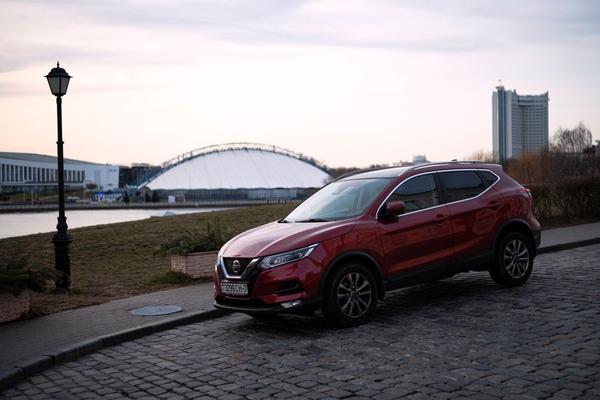
This Nissan Qashqai e-POWER review starts with what makes it unusual: its route to hybrid efficiency. It has a petrol engine, but that engine does not directly drive the wheels. Instead, it generates electricity for a battery and electric motor, so the Qashqai moves with the smooth response of an EV without needing to be plugged in. For UK family-SUV buyers who like electric-car refinement but are not ready to depend on charging, that makes it a distinctive proposition.
The latest version adds more power, better efficiency and improved noise isolation. It is still recognisably a Qashqai: practical, easy to drive and sensibly laid out. The key question is whether the e-POWER system delivers enough economy and refinement to justify its price premium over a conventional mild hybrid.
How the Qashqai e-POWER system works
In a normal hybrid, the petrol engine can help turn the wheels. In the Qashqai e-POWER, the wheels are driven by the electric motor alone. The 1.5-litre petrol engine acts mainly as an onboard generator, producing electricity when required. There is no charging cable and no need to plan journeys around charging stops.
The current UK model produces up to 205 PS, and its electric-motor delivery makes it feel brisk from low speeds. Acceleration is smooth rather than dramatic, with 0-62mph taking roughly eight seconds depending on driving mode. Around town, the lack of gear changes and instant response make it feel closer to an EV than most self-charging hybrids.
Refinement is the e-POWER system’s strongest argument
Earlier versions could become noticeably busy when the petrol engine worked hard. The latest system is better isolated, and Nissan says it can be up to 5.6dB quieter than the previous generation. In normal urban driving, the engine often fades into the background while the electric motor provides continuous acceleration.
Hard acceleration can still make the engine more obvious, so this is not the same experience as a battery-electric SUV. For school runs, commuting and stop-start traffic, though, the Qashqai e-POWER’s calm response is one of its most convincing qualities.
Qashqai e-POWER mpg: what should UK drivers expect?
Official WLTP combined fuel economy for the current e-POWER range is around 62.8 to 64.2mpg, depending on specification. Nissan quotes a 55-litre fuel tank, giving it a substantial potential range. The headline figure is best treated as a comparison point rather than a guaranteed result.
Real-world economy varies with route and temperature. Independent testing has shown that around 50mpg is realistic in mixed driving, while gentler urban use can go well beyond that. Some recent tests have also achieved more than 60mpg in favourable conditions. The system’s biggest advantage appears when there is frequent slowing and accelerating, because regenerative braking can recover energy.
Consider a 12-mile commute through suburban traffic with roundabouts and 30mph zones. That journey suits e-POWER better than a constant high-speed motorway run. If most of your mileage is long motorway work, its economy advantage over a good petrol or conventional hybrid may narrow.
Qashqai e-POWER interior and family practicality
The qashqai e-power interior avoids the overly minimalist approach found in some newer SUVs. Physical controls remain easy to reach, the driving position is straightforward, and the cabin feels appropriately finished. Higher trims add more decorative materials, ambient lighting and extra comfort features, while Google-based infotainment is available on key grades.
Space is competitive for a five-seat family crossover. At 4,425mm long, the Qashqai remains manageable in UK car parks, while wide-opening rear doors help with child seats. Official luggage figures vary by specification, with around 455 to 504 litres available behind the rear seats and up to roughly 1,440 litres with them folded on e-POWER versions.
That is useful for pushchairs, weekly shopping and holiday luggage without turning the car into an oversized SUV. Natural next reads include our hybrid SUV buying guide and family SUV boot-space comparison.
Comfort, handling and everyday driving
The Qashqai is tuned for ease rather than excitement. Steering is light and accurate, visibility is good, and the car feels natural in town. Ride comfort is generally pleasant, although versions on larger wheels can feel busier over broken surfaces.
Regenerative braking helps reduce reliance on the brake pedal, and Nissan’s e-Pedal Step function can provide stronger deceleration when you lift off the accelerator. It does not make the Qashqai a true one-pedal EV in every situation, but it can make dense traffic less tiring once you adapt to it.
Qashqai e-POWER price and value
The current qashqai e-power price in the UK starts from about £34,875 for an Acenta Premium model, with better-equipped versions rising through the high £30,000s and some specifications moving beyond £40,000. That puts e-POWER above the entry-level mild-hybrid Qashqai, so value depends on how much you appreciate the smoother drivetrain and stronger urban efficiency.
A mid-range trim is likely to make the most sense for many buyers because it keeps the e-POWER system’s main benefits without allowing luxury equipment and larger wheels to inflate the price. Compare insurance, tyre costs and finance terms as well as fuel economy. Our mild hybrid vs full hybrid cars guide is another useful comparison.
Who should buy the Nissan Qashqai e-POWER?
The strongest case is for someone who wants EV-like driving manners without home charging. It works particularly well for mixed urban and suburban journeys, where frequent speed changes allow the hybrid system to show its strengths. It also suits families who value a conventional, usable cabin.
Drivers doing very high motorway mileage should test it on their normal type of road before deciding. The Qashqai remains efficient, but the advantage of its series-hybrid layout is most obvious at lower and variable speeds.
Frequently asked questions
Does the Nissan Qashqai e-POWER need to be plugged in?
No. The petrol engine generates electricity onboard, while the electric motor drives the wheels. You refuel it with petrol in the usual way.
What mpg does the Qashqai e-POWER achieve?
Current official UK figures are roughly 62.8 to 64.2mpg combined. Real-world results depend on speed, temperature, traffic, wheel size and driving style, with urban journeys often producing the strongest economy.
Is the Qashqai e-POWER a full electric car?
No. It feels electric at the wheels because propulsion comes from an electric motor, but it still relies on a petrol engine to generate the electricity it uses.
Is the Qashqai e-POWER practical for a family?
Yes. It seats five, has wide-opening rear doors and offers competitive luggage capacity for the class, with boot space varying by trim and specification.
Verdict
The Nissan Qashqai e-POWER is best viewed as an alternative to an ordinary hybrid rather than a substitute for a pure EV. Its electric-motor drive gives it smooth response, the latest system is more refined, and its strongest economy is available in the stop-start driving many family SUVs spend their lives doing.
It is not the cheapest Qashqai, and motorway-heavy drivers may not recover the price premium through fuel savings alone. For buyers who want a comfortable, practical SUV with EV-like manners but no charging routine, e-POWER gives the Qashqai a clear identity in a crowded market.